
...
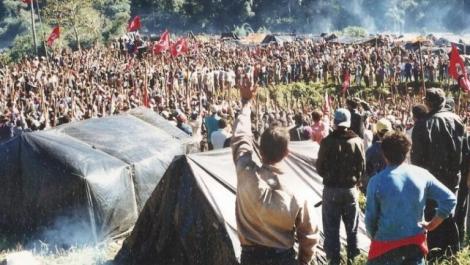

After occupying land for decades, thousands of Brazilian families have the chance to put down roots
MST Reaffirms Anti-Imperialist Struggle and Calls on the Brazilian People for People’s Agrarian Reform

The number of murders in Brazil's rural areas doubled in 2025. According to the *Conflicts in the Countryside Brazil* report, released this Monday (April 27) by the Pastoral Land Commission (CPT), 26 deaths were recorded in the country's agrarian conflicts—up from 13 the previous year. Of the 26 victims, 16 were located in the Legal Amazon region. Pará and Rondônia top the death toll rankings, with 7 fatalities each; it was in these two states that the two massacres recorded during the period took place, each resulting in three deaths.
Although the overall number of conflicts fell by 28% compared to 2024—dropping from 2,207 to 1,593 incidents—the data reveals that this decline in recorded cases did not signify a retreat of violence. On the contrary: the violence became more lethal.
Among all groups involved in rural actions in 2025, landless rural workers were the most active in their mobilization. In total, 72 land occupations and 9 encampments were recorded as part of a larger total of 100 acts of resistance—including encampments, occupations, and land repossessions—which account for a portion of the 1,286 land-related conflicts documented during the period.

Land disputes remain the primary form of rural violence: 75% of all incidents—or 1,186 recorded cases—are related to conflicts over land occupation and possession. Maranhão leads the list with 190 cases, followed by Pará (142), Rondônia (111), and Bahia (101).

Program of Plantar Árvores: Plant 100 million trees in ten years in rural schools, cooperatives, technical training centers, squares, avenues and cities, strengthen the production of healthy food in MST settlements and encampments, denounce the destructive model of agribusiness and its impacts on the environment.
These are some of the objectives of the National Plan to Plant Trees, Produce Healthy Food, launched in 2020 by the MST throughout Brazil.
The Plan is a space for articulation, training, political organization and broad debate, reaffirming:
• People’s Agrarian Reform* and the defense of their territories and family farming;
• Food Sovereignty as a radical change in the direction of food production and distribution, providing access to healthy food especially for the most vulnerable populations, as a way of promoting preventive health in the country that uses the most pesticides in the world;
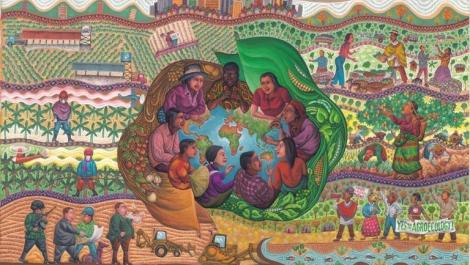
• Agroecology, which is based on sociobiodiversity, the solidarity economy and respect for traditional knowledge and local/regional cultures; and
• The care of Common Goods, such as water, minerals, land and biodiversity, which are finite natural resources and, therefore, common to all human beings (environmental preservation).
Read more on the MST's Tree Planting Program
Gilmar Mauro, of the National Coordination of the Landless Rural Workers' Movement (MST), presents a reflection on the political, economic, and agrarian situation in Brazil and the world.
PLEASE USE THE YOUTUBE VIDEO WHICH HAS BEEN DUBBED IN ENGLISH

This interview with Maria de Jesus dos Santos Gomes—state coordinator of the MST (Landless Workers' Movement) in Ceará—covers aspects of her life, highlighting memories of hunger in her community, solidarity initiatives, and her participation and organizing work within Via Campesina through the MST in the state.
The interview took place at the Frei Humberto Training Center in Fortaleza on the evening of May 20, 2026. Maria de Jesus was waiting for us after spending the entire day selling her produce at an Agrarian Reform Fair held in Fortaleza at the time. We chose the Frei Humberto Training Center—a space dedicated to various Via Campesina activities in Ceará—as the venue for the interview. We settled into the auditorium named in honor of the poet Patativa do Assaré; surrounded by slogans of the struggle for land and life adorning the walls, we began our conversation.
Francisco Regis and Kenia Rios – We would like you to introduce yourself: your name, your birthplace, and how you would like to be introduced in this RBHO publication.
Maria de Jesus – I am Maria de Jesus dos Santos Gomes. I was born in the community of Ipueira dos Gomes, in the municipality of Canindé, Ceará. I was born on June 18, 1971. My birthplace, Canindé, is a municipality in the semi-arid region. I am part of the MST-CE state coordination team.
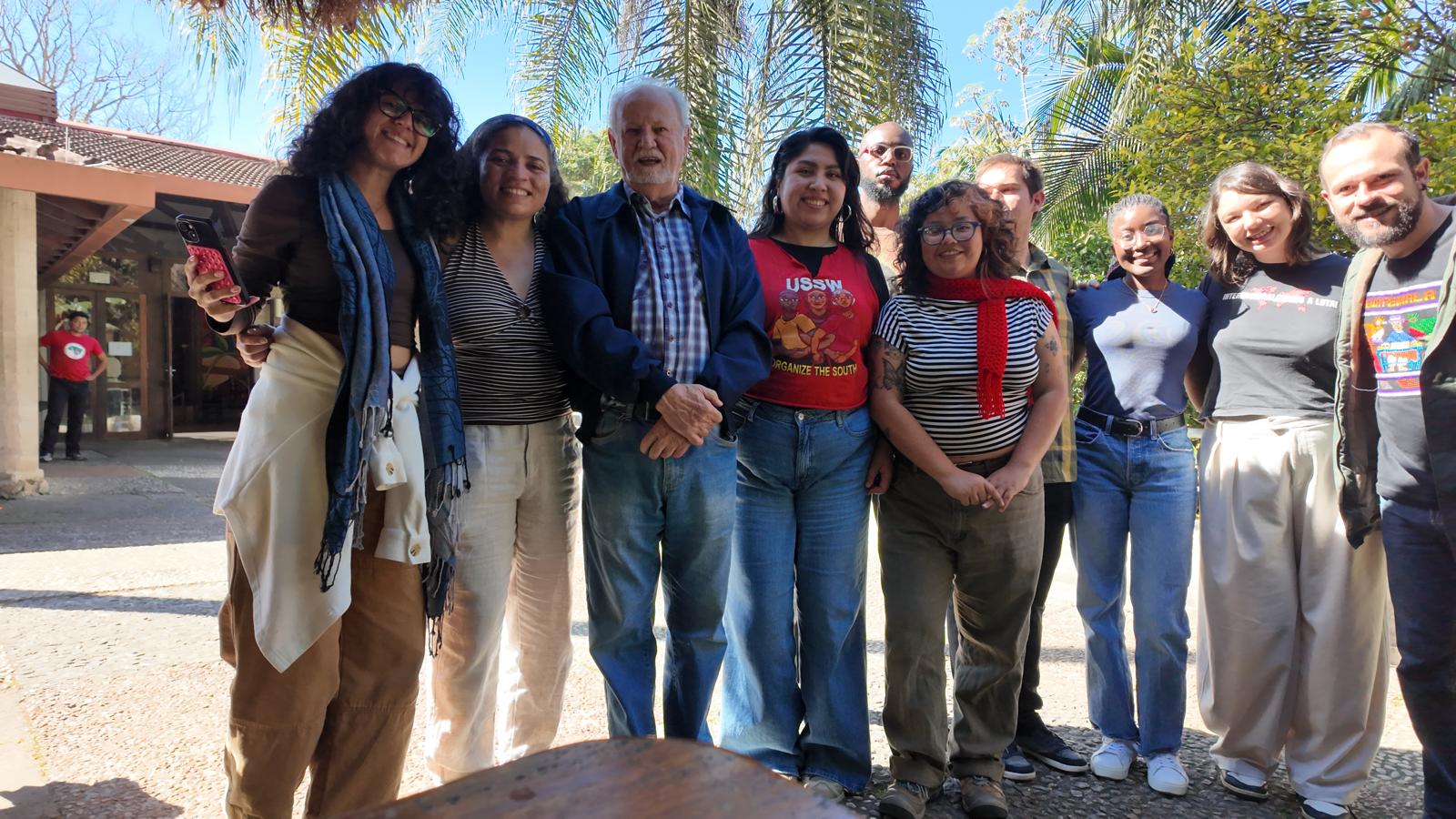
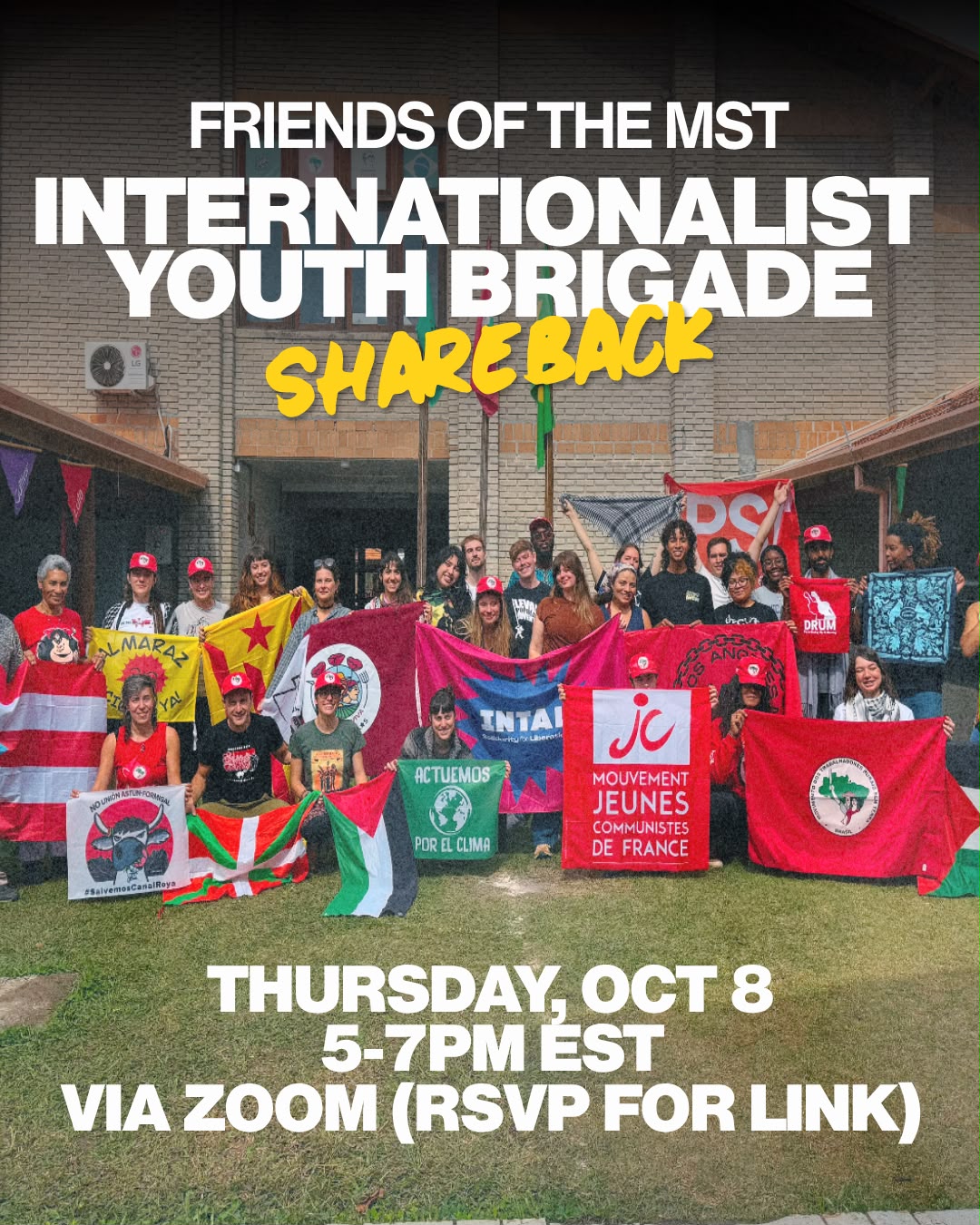
The Friends of the MST of U.S. and Puerto Rico helped organize a Youth delegation that just returned from the ENFF- the Florestan...
Read more FMST news...