Position of MST on the Legal Proceedings in the Supreme Court and the Political Prisoners
Dear Comrades José Dirceu and José Genoíno,
The National Directorate of the Landless Rural Workers Movement (MST) has been following with indignation the Judgment of Exception and unjust conviction.
We vehemently repudiate the action of the Brazilian judiciary, especially the Supreme Court (STF), servant to the ruling class in thecountry, which for years has been acting against the working class, social movements and political struggle.
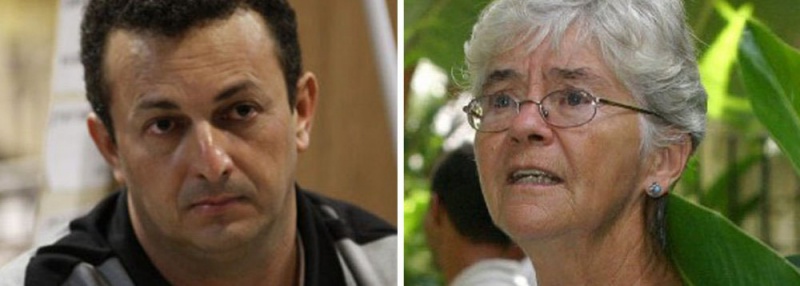 “Bida,” to 30 years in prison, initially without being able to leave prison*, for the death of Sister Dorothy Stang, as a coauthor and instigator of the crime. The trial, the fourth conducted after a new set of lawyers, lasted more than 14 hours. The verdict was read by Judge Raimundo Moisés Alves Flexa.
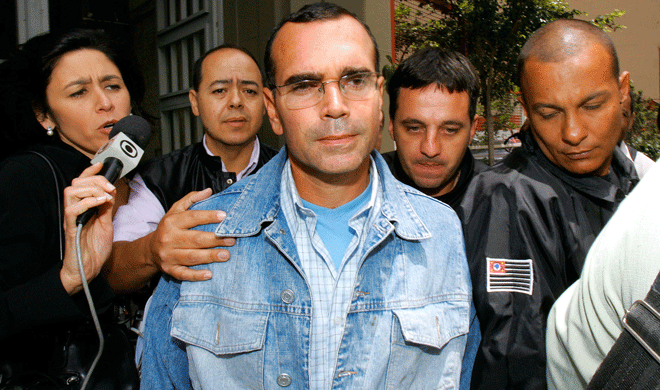 many defensive maneuvers to delay the trial; this is the third time that the jury trial is postponed
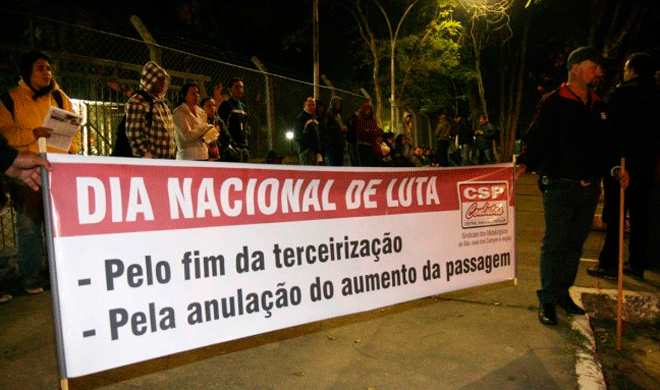 of Struggle. Called for by CUT (Central Workers Union), an assortment of labor unions and a vast array of social movements, including the MST, the National Day of Struggle put forth specific demands for the working class and social movements, including a call for agrarian reform. The MST participated and helped lead this mobilization through the country.
 In an exclusive interview with the Portal IG, Gilmar Mauro, leader of the Landless Workers Movement, stated that the movement -- which has a constituency estimated to be around two million rural workers -- is building an alliance with urban sectors to take part in protests and put pressure on the Dilma administration to take concrete measures to confront social problems.
 The MST will be included in the mobilization of trade unions, social movements and political organizations of the working class to take to the streets of the country, on Thursday (July 11), to defend a political platform, with the reduction of working hours, investment of 10% of GDP for health and education, free and quality public transport, the democratization of the media and the implementation of land reform.
 by Eduardo Scolese, of Agência Folha